[admin post] [sticky entry] Admin Post: Sticky: About, Rules & Posting Guidelines

Dec. 28th, 2023 04:28 pm
quillpunk: screenshot of Rue (with a super innocent expression) from the webcomic The Villainess Flips the Script (rue2)
[personal profile] quillpunk

Welcome to [community profile] booknook, made because a lot of the reading comms on DW seem pretty dead and/or focused on getting you to read.

This is made to be a general reading community. Hopefully there'll be a few regular posts:

  • RIP (Read In Progress) Wednesday
  • Monthly themed rec post (to be clear, inviting other people to rec books that fit the theme in the comments, not me reccing books)

(If you realize I've missed a regular post, you're more than welcome to post it in my place! My memory can at times not be relied upon.)

Members of the comm are able to post whenever they want. A few suggestions are things like reviews, discussions about a particular book/author/series, reading challenges, reading memes, asking for recs, recomending books, news about upcoming books you're excited about (or dread; there can be a lot of feels about books!).

While you need to be a member to post, you do not need to be one to comment.

General Posting Guidelines

  • The subject line should always make it clear what kind of post it is; IE, it should state if it's a review, recommendation, request for recommendations, discussion post etc.
  • All posts should be tagged. If the tag you need doesn't exist, use the tag [!] non-existent tag. If the amount of tags is overwhelming (I know it can be), then use the tag browsing feature on the post creation page, at which point there will be an option to search for tags. Use that to search for the tags you need and ignore the rest. And don't worry; as the admin, I can add/remove tags as needed!
  • If your posts includes NSFW material, whatever that may be, adjust the post's age restriction. The default is no restriction. There's also NSFW and SFW tags; these are voluntary.
  • Review posts should include headers with all necessary information; title, author, genres, content warnings etc.
  • Crossposting is allowed! But if you're crossposting a post here, do please post it in its entirety, don't just go "and you can continue reading at..."
  • All spoilers (no matter how old the book is!) should be behind a cut or an accordion. These are both HTML functions.

HTML Code for a read more cut:

<cut>this is where the text behind the cut goes</cut>

HTML Code for a read more cut with a custom 'read more' text:

<cut text="you can write whatever here and it'll replace the generic 'read more' bit">this is where the text behind the cut goes</cut>

HTML Code for accordions:

<details><summary>This is where you say/warn for what's inside: you can think of it like a subject line</summary>This text is hidden until you click it open!</details>

This is not a self-promo community for authors, but in the interest of there being clear rules about that, here are those:

  • One (1) promotion post per title OR one (1) promotion post per series. It should be clearly tagged as self-promotion, and the subject line should go like this: [Self-Promo] your books title (Genre, Sub-Genre)
  • You are not allowed to rec your books unless a person is asking for recs that your book specifically fits.
quillpunk: John Sheppard from SGA in front of an explosion, text 'boom' in foreground. (sga john go boom)
[personal profile] quillpunk
Hello, hello! [community profile] booknook is (again) tossing its hat in the ring for [community profile] 3weeks4dreamwidth in the form of a friending meme :D

This is the same meme as last year, as I do not have the brain-space to make a new one, but who knows! You're answers might have changed! You might not have seen the newest entries! You might have completely forgotten to check it out at all, even though you're the admin and you really should have. So let's do this again! <3

Copy and paste the text from the little box below into a new comment on this post. Feel free to remove the questions that aren't relevant for you! (If you want to fill this out in a post somewhere else, you're welcome do so, simply credit [community profile] booknook :D)

Review

Nov. 1st, 2026 12:28 am
cornerofmadness: (books)
[personal profile] cornerofmadness
I know I was supposed to put a review up but since I forgot when in my usual haze, have two from my spooky season reads now.

DiavolaDiavola by Jennifer Marie Thorne

My rating: 4 of 5 stars


Boy, looking at other reviews this one is divisive, either you loved it or hated it. I, for the most part, very much enjoyed it. Anna Pace is stuck going to the annual family reunion in Montespero, a tiny village in Italy. In many ways the scariest part of the book is her family (and for those who didn't think the Paces were realistic, I'm glad you haven't been exposed to families like this. I have. They're real) Anna is the black sheep, the one they don't think is enough. She's recently broken up with a long term boyfriend, she didn't go to college like her rich parents wanted to (and they are the type to pay for everything and then hold it over your heads) that she's using her art to do advertising versus trying to get in a gallery etc. Her twin, Benny, who she thought was at least a bit supportive isn't really and his boyfriend, Christopher, whoo boy I was hoping diavola got him, he's such a snob and know it all.

Nicole, her older sister, controls everything and everyone (has planned everyone's movements to the last second, including excluding Anna from some things with parental approval), including her husband (who she thinks Anna wants) and her two young daughters (about Anna's only cheerleaders). Almost immediately, the villa they've rented feels off and people are asking Anna is she sure she wants to be there even as they drive her up to the door. Christopher, Benny's boyfriend, makes things weird by a) acting like he's in competition with Anna for Benny's attention (this has ramifications later that made me very disappointed in her brother) and b) is absolutely irate and demanding that the locked tower must be the best room in the house and it should be his.

The haunting starts small, bad dreams, noises, slamming doors. Before long, Anna is seeing, and drawing, this yellow-haired Florentine woman everywhere. Dreams become waking nightmares. Time is lost. And as Anna digs into the place's history things only become more dire and her family shifts more and more blame onto her. I particularly liked the epilogue which seemed fitting. I liked that Anna definitely took the fight to Diavola eventually (on the down side, she is so used to submitting to her family, she tends to avoid rather than confront).

What didn't work for me? I wish we had known more about the haunt which okay might not have been possible but still. Without spoilers, there is a point in time where Anna thinks she's free of the monster but we know that's unlikely since you know, horror tropes. Anyhow this part goes on way too long. In her preparing to free herself, Anna does some research including Stregheria which 'is too niche for the book to be in print.' Um, yeah, no. Go do an Amazon search. There is plenty in print books including the ones by Raven Grimassi who popularized it in the states (even if I don't agree with his conclusions and oh, right, I'm a follower of Italian & Italian/American magical practices). That threw me out of the book.

Overall, I did enjoy this. It felt like it had the ending it should have.


View all my reviews

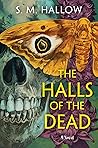
The Halls of the DeadThe Halls of the Dead by S. M. Hallow

My rating: 3 of 5 stars


I wanted to love this more than I did. It starts off with a bang with Irene resurrecting the woman she loves after Agnes had been hung for performing necromancy/murder. Helping her is Irene's husband, St. John who himself is something special. And...then it drags on and on. There are far too many flashbacks and it takes far too long before Agnes starts to do anything. Honestly this might have been more successful as a novella without all the flashbacks because while they're interesting enough, they screw the pacing of this novel so badly.

There is an interesting view on death and the afterlife in this. What has happened to Irene is also cool and creepy. That said it take the story far too long to really get moving. It got stuck in first gear for nearly half the book. Worse, the most interesting thing about Agnes is the thing that 'doesn't go right' in her resurrection. She makes so many dumb choices I had begun to wish they had left her dead. It's hard to read when you don't like one of the three protagonists (because we do get chapters in all three's povs)

I found St John to be the most interesting and compelling character which isn't great because he's basically their third. The story is meant to be mostly Irene and Agnes and I didn't care about their love story in the least. I was more interested in seeing how they get out of the mess Agnes made. There some spicy scenes (and a few that stretched the bonds of belief given how injured everyone is all the time).

It opens with a decent resolution (and a damn creepy one at that) It's also open to a sequel. Would I read it? Probably from the library but I don't see me buying it. I'd like to know more about St John if nothing else.

Content warning: gore. Lots of gore. cannibalism, murder, abuse


View all my reviews
mostlycrunchy: Illustration of Matthew Cromwell, a middle-aged white man with slicked back hair and an unamused expression (cromwell)
[personal profile] mostlycrunchy
Title: Henry Goes Bush
Author: Wayne Marshall
Genre: Speculative historical fiction. I think.

Henry Lawson and Andrew 'Banjo' Patterson were Australian poets who played a huge role in making the national myth of the bush, which forms part of the (white) Australian identity. As a kid I was taught their poems - mostly Banjo's - but we weren't really taught anything about the writers, even though Lawson is on our ten dollar note. They existed somewhere in 'the past' where all writers resided during my childhood.

When Lawson was a young man, he made a trip to the outback town of Bourke, and it's not clear exactly what he did there; there are many different versions hung on few historical facts. In Henry Goes Bush he's essentially forced out there by his publisher at The Bulletin to experience the real bush (he lives in Sydney,) and dry out, as history records his attachment to drink blighted his entire life.

In this version, a series of earthquakes in Bourke open strangely lit tunnels that link the town to other realities in which various different versions of Lawson's visit take place, including one in which his poet's feud with his rival Banjo is to be settled, not in the pages of The Bulletin, but in a gunfight to the death. (And another in which his intense friendship with Jim Gordon is not platonic.)

The story intially switches between Henry's story and an overview of the historical record, but once the latter is concluded the narrative picks up, as Henry uses the tunnels to escape from one misadventure to the next, eventually ending up in the murderous Banjo's sights.

I had a great time. I had absolutely no clue where this novel was going at first, but the ending was satisfying. I feel like I learned something, too. I'm unlikely to read any of the biographies the author credits; the reality is rather depressing after all, and I don't like biographies in general, but I feel like a hole in my general knowledge has been loosely patched, at least.
auberi: Crop of painting "Gleipnir" in which a wolf's mouth is open around a woman's hand. (Default)
[personal profile] auberi
Title: They Fear Not Men in the Woods
Author: Gretchen McNeil
Genre: Horror

“I’ve never once been afraid in the woods and I’m certainly not going to start now.”

Jen Monroe receives a long-awaited call from her estranged mother that the body of her father, a forest ranger who went missing when Jen was sixteen, has finally been found. But when she returns to the small town where she grew up, Jen finds that no one is able or willing to answer questions about her father’s death — or the circumstances in which his body was found. Even stranger: a group of hikers has been missing for several months after setting out for the same area that Jen’s father told her he would be patrolling the last time she saw him. Convinced her father is still alive and determined to find him, Jen decides to recreate his last hike. When her former friend group (including her childhood best friend, high school best frenemy, and high school ex-boyfriend, among others) find out her intention to go into the woods, they demand to join her. What they find in the forest forever changes them.

The film comp for this book is Midsommar, and I know exactly why they marketed it that way, but better film comps might be The Blair Witch Project or The Ritual meets Annihilation. Despite elements of folklore, I’d place this book very firmly within the eco-horror subgenre rather than folk horror.

While the sense of dread is slow and mounting, the plot moved along pretty quickly. The first few chapters are a little slow but once the plan is in motion it turns into a real page-turner. Each chapter does a good job ratcheting the tension higher. The reveal(s) were sufficiently built up to.

I’ve seen mixed opinions on Jen as a protagonist. She begins the book as a knowing and willing affair partner. She’s dry and sarcastic, and even downright mean, to just about everyone in the book. She’s an unreliable narrator about her internal states. And having said all this, I’m very much in the “unlikeable to YOU” camp; I thought she was grand. She’s funny and resourceful and incredibly dedicated to her father and to the woods they both love. For a story where some fairly frightening, sad, and gruesome things happen on a spooky camping trip, this book is actually a lot of fun and I think that is due in large part to Jen’s perspective.

Apart from being eco-horror, this book seems to be very much in the tradition of gothic literature. The Washington redwood forest setting is unsettling and pervasive, and it receives the same narrative treatment as ruined medieval castles or fog-covered moors did in early gothic lit. There’s a strong element of the sublime as a mixture of awe and terror in the descriptions of the woods and the events therein. There are plot-relevant found journals. McNeil emphasizes themes of corruption, concealment, and ‘haunting’ — not only the past haunting the present, but the “civilized” world haunting the “natural” world (and vice versa).

From looking at ratings on storygraph and goodreads, this book seems to be polarizing. I’ll admit that, despite personally loving it, this book is not for everyone. I think it will best suit readers looking for a creepy, folklore-tinged tale in a visceral natural setting who like their main characters flawed.

Warnings Graphic death, gun violence, body horror

[personal profile] perfectnumber628
 I reviewed the book "Beyond Welcome"

"Beyond Welcome" asks, why would Joseph do this? Could it be because, even though he had lived in Egypt for a long time, and had basically assimilated, he still felt that he needed to prove his loyalty to Pharaoh, or else people would think he wasn't Egyptian "enough"? As immigrants, there is pressure to fit in, to go along with unjust systems that exist in the country you have immigrated to. You don't want to stand out. You don't want people to see that you're different. So you don't take a stand and challenge things that are clearly wrong.
 

Read it here: Beyond Welcome (a book about listening to and learning from immigrants)
stonepicnicking_okapi: haunted house (hauntedhouse)
[personal profile] stonepicnicking_okapi
Title: The Southern Book Club's Guide to Slaying Vampires
Author: Grady Hendrix
Genre: Horror
Warnings: blood-drinking, rape, attempted suicide and suicide, including child suicide, child rape, dementia, domestic abuse, psychiatric hospitalization

[This is October's book for DW comm Book Club so if you want to participate in the discussion, questions will go up here on the 31st: https://bookclub-dw.dreamwidth.org/]

I mostly listened to the audiobook version narrated by Bahni Turpin (13 hours, 49 minutes)

This is the story of Dracula set in the 1990's in a white, wealthy suburb of Charleston, South Carolina (USA) called Mount Pleasant. The main character is Patricia Campbell who is a wealthy white stay-at-home mom of two. The vampire of the story is the nephew of an elderly neighbor.

After embarrassing herself at her original book club, Patricia eventually becomes part of a new book club with a handful of other wealthy white moms/housewives. The focus of the book club is true crime.

It takes a frustratingly long time for Patricia to come to the conclusion that James is a vampire. One, James' aunt (enthralled and/or turned by James) attacks Patricia. Two, Patricia actually helps James open a bank account (and he has a lot of cash) and learns he has a condition that prevents him from going out in daytime without sunglasses. Then through her demented mother-in-law's caregiver, Patricia learns that children are dying in the black part of town. And then she sees James attacking a black child, but the police don't believe her, her husband (who is a career-ambitious psychiatrist) doesn't believe her, and the book club doesn't believe her (at first). Eventually, meaning years later, when all the husbands have invested their lifesavings in a real estate scheme which includes the charismatic and cash-heavy James, the book club comes around. And they battle James. And win (but not without casualties).

( Read more... )
merrileemakes: Tabby cat feet standing on an open book (peets)
[personal profile] merrileemakes

I picked this up free from the recycling table at my spinners and weavers group. I love the movie and even went to see the travelling exhibition of the costumes years ago.

Tilly Dunnage has come home to care for her mad old mother. She left the small Victorian town of Dungatar years before, and became an accomplished couturier in Paris. Now she earns her living making exquisite frocks for the people who drove her away when she was ten. Through the long Dungatar nights, she sits at her sewing machine, planning revenge.

The Dressmaker is a modern Australian classic, much loved for its bittersweet humour. Set in the 1950s, its subjects include haute couture, love and hate, and a cast of engagingly eccentric characters.

I started off really enjoying it. The writing just flowed and the characters were all quirky. The book really captures the claustrophobic and judgemental small town mentality. There's a lot of basic white women and they mostly have the same shitty thoughts and behaviours. It does include some very casual childhood sexual assault though, which the movie wisely excluded. And the costumes, which are meant to be a driving part of the plot, are also poorly described. Unless you have a strong mental image of shantung silk, 1950s Balenciaga or flounces these mentions are going to pass you by. ( Read more... )

Overall, I'd recommend skip the book and watch the movie. At least you can enjoy the costumes that way and Kate Winslet's divine acting.

3/5 burning rubbish heaps

indigoblind: (Default)
[personal profile] indigoblind
Title There Is No Antimemetics Division
Author qntm
Genre Sci-Fi, maybe Horror?

I used to be a pretty devoted SCP reader, so it's not my first rodeo- I read this way back when it was being written, and loved it then. I've gone back and reread a few times, including during/after reading the tradpub version, so no surprise to say I really enjoyed this.

I tend to be hesitant and skeptical of the constantly-growing trend of adapting fanworks into mainstream novels; it often feels cheap because, fundamentally, it is cheap. The story's already done, probably somewhat edited, and comes with a built in audience. That's not to say it's never done well, but as a trend, I'm not a fan.

When I heard this story was getting a deal-- much as I loved it-- I was... skeptical. As (again) a long-time SCP reader who'd been halfway there as the site's purview grew more and more conceptual and complicated I genuinely wondered whether someone unfamiliar with the ideas would be into it, and frankly, how you could strip out the underpinnings and history of the Foundation without either making it incomprehensible or needing miles of extra exposition.

And I'll be honest I can't tell you how it reads to someone coming in blind, but it seems to be doing well overall, and I think it's well-deserved.

In short: Marie Quinn works for a secretive organization that studies and contains impossible phenomena. Her specialty is in antimemes, or self-keeping secrets: things impossible to perceive in normal circumstances. It's a small division. Wait, smaller. But... how can it be that small and manage a whole site?

Over time, she starts to realize she's fighting a war-- one where simply being aware of it will make you a casualty.

I find it hard to resist the strange logic of this story-- the reader remembers throughout the things characters have had to forget to survive, but rather than being irritating it highlights the tragedy of having to leave knowledge behind to stand a chance of holding back the darkness.

Basically, if you like a book that makes you have to tilt your brain in a new way, it's a solid pick.
valoise: (Default)
[personal profile] valoise
Title Stirring the Pot with Benjamin Franklin: A Founding Father's Culinary Adventures
Author Rae Katherine Eighmey
Genre nonfiction, biography

Eighmey always uses indepth research in her food history books. She digs deep into primary sources such as letters, journals, diaries, and household ledgers to find information relating foods eaten and cooked in the time periods and by the persons she is focused on. In the case of Benjamin Franklin, the evidence is slight. For an articulate man who wrote prolifically until the end of his eighty-four years he left scant personal culinary evidence.

What this book actually provides is a social history-focused biography of Franklin with each chapter highlighted by recipes from period sources that Franklin could have encountered. It excels at that. Information about his career and family life, details about the homes where he lived and conducted his printing and publishing business helped to give a feel of the lives of the Franklin family.

Deborah Franklin, his wife, comes through as a strong member of a loving marriage. She took an active role in his business, actually keeping things running during his first lengthy diplomatic trip to England. Details from letters between them are touching. They also give a little insight into Franklin's favorite foods. He would send home gifts to his wife and daughter and request they please send him comforting foods from home like cornmeal and local apples. I was surprised to find that Franklin's son William was a loyalist, exiled to England in 1777 and never reconciled with his father.

So, I would heartily recommend this book as a biography of Benjamin Franklin, not so much as a cookbook.

Review:

Oct. 25th, 2026 05:35 pm
xwyndx: (coffee)
[personal profile] xwyndx
Title: The Secret World of Briar Rose
Author: Cindy Pham
Genre: Fantasy

I knew two things when picking up this book: that it would have very flowery prose, and that it was a retelling from The Sleeping Beauty in which sleeping forever was a metaphor for depression.

Cindy has never hidden her preference towards poetic and metaphorical prose, and she herself has adviced people to not pick up her book if they prefer action driven stories (which tends to be my case). Here, you can see the influence of books like This is how you lose the time war (book that the author loves and I didn't like at all). But perhaps thanks to the previous warning I picked this book up expecting the story to not pick up for pages and pages, and I was honestly surprised when it advanced at a good pace- I never felt bored and the flowery prose was an added value instead of a drag.

Now, about the story itself: it's a retelling in the most loose definition. Yes, the characters are all there, but the way their stories are woven is quite different from the classic tale. Amelia (the Sleeping Beauty) reveals her tragic past in flashbacks that always left me wanting to know more (and wanting to murder her father, too), even when we all know her story will end falling asleep for a hundred years we still don't know why and how it happens. Meanwhile, in present times, Corin is a thief who enters the princess' dream by chance while she looks for her little sister, Elly. Now the two sisters have to escape Amelia's eternal slumber or try to wake her up to restore the kingdom to the way it was when the royal family was in charge.

Even though there are some feelings growing between Corin and Amelia, I wouldn't call this a romance. There are 100 years separating their lives and they both know they can't live in a dream forever- which is basically the thesis of the book, no matter how tempting it might be.

The dream world was confusing at times and it made it hard for me to imagine what was going on, but that was intentional on the author's part I think, to make the dream rules weird and confusing- it was just not my favorite part of the book. And what might my favorite part be, then? Glad you asked! It was Malicine. I was obssesed enough with Maleficent before they were portrayed as a non binary fairy demon who has become one of my favorite characters ever.


TW of the book:Depression, child abuse, death, war, homophobia
vamp_reads: (Default)
[personal profile] vamp_reads
Okay, getting a library card for Berlin has been one of my reading goals for this year and I finally suceeded. The idea being that the Berlin library system uses Libby as their digital provider. (Side note: Most German libraries use a German app/service called Onleihe.)

So. I excitedly played around with Libby and I really like it so far. But one thing I'm missing is a way to "subscribe" to an author or a series. I would love to get a notification when Libby adds a new book from an author I'm interested in (likewise with series), but I don't find a button for that. Seeing as you can even get Libby to notify you about books they don't currently have, I can't imagine a feature like "subscribe to author" is something they simply didn't think of.

Are any of you using Libby and can enlighten me? Does a feature like this exist? Or if not ... is there a workaround?
susieboo: Belle and the Beast in his library. Belle is on a ladder in front of a bookcase, talking to the Beast. (beauty and the beast)
[personal profile] susieboo
So I just finished reading Such a Lucky Girl by Wendy Heard, which I wanted to love but came away from with very mixed feelings. The novel follows Kerry, a high schooler who three years ago was dumped by her best friend, Bella. Bella's now an influencer with millions of followers, and Kerry obsessively watches all her content, torn between wishing she could go back to the way things were, and wanting revenge. When she finds an old self-help book with instructions for manifesting and taking what's rightfully hers, Kerry decides to give it a try, and quickly finds she's bitten off more than she can chew when things take a turn for the dark and creepy. It's by no means bad and I had trouble putting it down, and I loved the way the narrative jumps around to several different POV characters. One choice I thought was especially clever was the decision to never put the reader in Bella's head; we see her from the POV of her former best friend, her little sister, her mother, her followers, her classmates, but never Bella's own thoughts, which keeps the reader in suspense about her motivations and how she's being affected by everything. But something about this thriller left me feeling a bit cold. It felt a little overstuffed and sometimes I feel like it veered too much into teaching a lesson instead of telling a story - though that may be a result of the YA demographic.

(Also, sidebar, did anyone else ever read How to be Popular by Meg Cabot? I was obsessed with that book as a tween and Such a Lucky Girl feels like that one's evil twin.)

Anyway, books about the artifice of social media have always been interesting to me, especially ones that veer into thriller or horror territory. I know Yesteryear has been a divisive book, and I totally understand why - I have criticisms of it myself - but I devoured it in three days. Reconstructing Amelia is an unsung gem of early 2010s literature, and its use of social media in its plot and narrative structure is both clever and very true to the time in which it was written, speaking as someone who was 16-ish in the year the book is set. Extras, the fourth book in the Uglies series and my personal favorite, basically predicted influencers before that was even a thing. Yellowface is one of my favorite books of all time, and it's as much about the ugly side of internet fame as it is about the ugly side of publishing. (And how those two are unfortunately more hand-in-hand than ever.) Even outside the literary realm, I can't stop rubbernecking influencer drama, especially in the tradwife / self help space. (I'm not proud of this, it's just who I am.) But I've also noticed that in fiction, portrayal of social media is remarkably easy to screw up - which seems odd, given how integral it is to most people's lives now. It's always extremely obvious when the author doesn't actually know what they're talking about, and that can break the entire illusion.

But despite this pitfall, something about the internet and especially the panopticon of social media just lends itself amazingly well to thrillers and horrors. The fear of being watched, the fear of being found out, the fear of being lied to, the fear of being forgotten, the fear of being misunderstood, the paper trail that makes investigating both easier (you can comb through someone's entire history!) and harder (things can be deleted, altered, taken out of context etc)... it's all there for the taking. And maybe exploring it through scary stories is how we all cope with this digital hellscape we've semi-willingly consigned ourselves to.

What are some especially good (or especially bad) uses of social media you've seen in fiction, especially thrillers or horror novels? 

petrea_mitchell: (Default)
[personal profile] petrea_mitchell
Title: A Taste of My Own Medicine: When the Doctor Is the Patient
Author: Dr. Edward E. Rosenbaum
Genre: Memoir

At age 70, Ed Rosenbaum has a long, proud career in medicine to look back on. He was able to make it into medical school at a time when those schools openly limited the number of Jewish students. In World War Two, he served in a mobile surgical unit that participated in the invasions of Africa, Sicily, and Normandy. After going into private practice, he became part of the volunteer faculty of what was later Oregon Health & Science University, heading its rheumatology division for thirty years. Throughout his career, he has maintained the utmost standard of empathy and care for his patients, or so he believes.

A bout of persistent hoarseness is the beginning of a saga that will show him he has a lot left to learn.

This book is best known for being the basis of the movie The Doctor, but it is the typical Hollywood usage of "based on" which means "has almost nothing to do with". Rosenbaum was a rheumatologist, not a surgeon, practicing in Portland, Oregon, not San Francisco, and all characters, symptoms, and even the results of treatment in the movie are entirely fictional.

The experience in the book is a series of small realizations, which begin even before the eventual diagnosis of throat cancer. First Rosenbaum delays seeing a doctor for his own problem, then dithers about getting a second opinion, which he recognizes as behavior he's seen in his own patients and previously never understood. Then, after drug treatments produce no result, he is sent to a speech clinic, where he has his first taste of the trouble with the power imbalance between doctor and patient:
"Here, feel how tight this muscle is in your neck." And [the speech therapist] placed my hand on a neck muscle.

"You're right," I said. I really didn't notice any difference in the muscles, but I didn't want to hurt her feelings. That was dumb, but it is a common reaction of patients: don't upset the doctor or he or she won't like you and won't take good care of you. I was startled by that insight. Had I known that before? Would it have changed my relationship with my patients? I wasn't sure.

Ultimately it turns out to be cancer, and Rosenbaum is sent for radiation therapy. The second and longest part of the book is a day-by-day chronicle of every radiotherapy session (and the agonizing weekend days in between). Interspersed with the session descriptions are his reflections and anecdotes about his childhood in Omaha and his past patients-- sometimes to explain how they shaped him, sometimes to look back and realize now that he could have done much better.

In addition to discovering the experience of the patient, Rosenbaum lets the reader in on the world of the doctor. Rivalries and quirks of the medical profession sometimes shape patient care in ways unrelated to the illness. And doctors become hypochondriacs, he says, because they know about all the worst possibilities. Part of what delays him at first is knowing that he might have cancer. Later, he has enormous anxiety about the radiotherapy because he knows the history of X-rays first being a fabulous new tool and then being discovered to cause cancer. He also knows the percentages about whether the treatment will work and all the errors that could be made along the way. But then on the weekends, he is consumed with fear about the cancer regrowing during the break in treatments and having a chance to metastasize.

It is not much of a spoiler to say that the author of this first-person narrative survives the experience. Rosenbaum's cancer is cured, and eventually he is back at work at his practice. But he has grown frustrated with the healthcare system, partly for longstanding reasons but partly also because his experience as a cancer patient has shown him a lot of way things could be improved. And even when he tries to improve himself, he finds his is holding himself to a standard he cannot achieve.

Rosenbaum would soon retire from his medical career and spend much of his remaining twenty-plus years as a writer and speaker, advocating for changes in the practice of medicine. This book is more than enough to explain why. For a look at the forces still shaping healthcare today, or just a positive story of a successful treatment and lessons learned, highly recommended.
stonepicnicking_okapi: books (books)
[personal profile] stonepicnicking_okapi
Title: Never Too Old to Save the World
Editors: Addie J. King and Alana Joli Abbott
Genre: Short story anthology, science fiction, fantasy

This is a collection of 19 short stories which explore what would happen if The Chosen One were called in midlife. So, the premise is the protagonist is middle aged or older. Some are science fiction or fantasy set in alternate universes (apocalyptic or post-apocalyptic) and others are set in realistic settings with fantasy/science fiction elements. As with any collection, there are hits and misses. Here are thoughts on a few of the stories

"Lean In: The Lord of Hell is Coming" by Erica Kahler sets the tone for trope subversion. The hero is a CEO middle aged-divorced woman skewering the idea of what destructive demons would and could do.

"Utopia" by Vaseem Khan had an original Star Wars feel to it. I enjoyed the style, which was different from many of the others.

"Jackalope Wives" by Ursula Vernon. A fable exploring women who dance that can shift by putting on rabbit skins and what happens when a thoughtless boy 'falls in love' with one of them. The ending surprised me, and I liked that.

"Granny" by RJ Sullivan was fun. An old lady who lives in a neighborhood that's gone down spies on her criminal neighbors and calls the cops on them. I liked the ending, which surprised me.

"Launch Day Milkshakes" by Jim C. Hines is typical of the collection where you can see what trope or idea they were trying to subvert (that demented old cat ladies aren't important, useful, heroic) but it's still a cute story.

There were two portal stories and a few which read like preambles or parts of larger fantasy works.

All in all, a good collection, but I was surprised there wasn't an introduction to it.
rocky41_7: (Default)
[personal profile] rocky41_7
Title: Carmilla
Author: J. Sheridan le Fanu
Genre: Horror, gothic, fiction

Halloween vampire classic! Today I finished Carmilla by J. Sheridan le Fanu. This novella is posited as the “first vampire book.” I can’t actually confirm if that’s true or not. But there is a vampire.

Your exposure to Carmilla may be like mine, in that it’s the “old lesbian vampire novel.” While there is truth to this—Carmilla is undoubtedly attracted to the protagonist, Laura—if you go into expecting a torrid lesbian love story, you will be disappointed. On the whole, it’s a lot more “lesbian passionately into disinterested but lonely straight girl” than a romance. At various times, Laura is repulsed and “embarrassed” by Carmilla’s fawning, and although taken by Carmilla’s beauty, never desires more than friendship from her. This is a story of a predator preying on vulnerable and ignorant young women for her own ends. However, if we can romanticize Dracula, which I’m happy to do, we can of course romanticize Carmilla—I just want to be upfront about the actual text.

The story is told through Laura’s written recollection after the events take place. It does a solid job setting the scene of Laura and her father’s isolation and some of the strange goings-on in the area around them before the mysterious Carmilla makes her entry. The abandoned village three miles west, around the ruins of the defunct Karnstein castle, make for a delicious bit of foreshadowing.

It plays up Carmilla’s strangeness and the push/pull of her relationship with Laura as an unknown illness claims the lives of young women nearby. I enjoyed the slowly increasing fear and horror Laura experiences as these inexplicable events in her home and her mind start piling up.

The novel is paced well until the end, which felt jarringly abrupt. I think the book would have benefitted from being longer. I was disappointed not to learn more about Carmilla and the Karnsteins’ history, and that there’s not much room for Laura to consider her feelings about discovering the truth of Carmilla (How would it feel to find out your only friend had been slowly killing you, and had been planning to do so from the start?), or really a denouement at all.

Overall, there’s a lot of tasty gothic mystery and troubling, strange physical + psychological maladies here, and I can definitely see how Carmilla influenced later vampire novels. However, I did find the sudden wrap-up disappointing. I still liked the book though, and it was a very fun October read.


petrea_mitchell: (Default)
[personal profile] petrea_mitchell
Title: Consider the Consequences
Authors: Doris Webster & Mary Alden Hopkins
Genre: Romance

Helen Rogers has fallen for wealthy rake Jed Harringdale. Her parents would rather she married the dull but dependable Saunders Mead. Which way should she turn? It's up to the reader to decide: Jed, Saunders, or a much more exciting path that involves neither of them...

Consider the Consequences was first published in 1930 and is believed to be the first gamebook-- the form which was later popularized by the Choose Your Own Adventure series. For years there were only a few known surviving copies, locked up in academic libraries and private collections, but in 2025 Pushkin Press stepped forward to issue a reprint.

There are three sections. The first and longest is about Helen, who can choose a suitor or instead go to the big city, get a job, and possibly make a deliberate choice to live as a single mother. The second is about Jed choosing how much to grow up or not, and the third concerns Saunders, forced to take over as the head of his family after his father's untimely death and try to provide for his younger siblings.

Webster and Hopkins wrote the book to be a party game. The introduction suggests reading it aloud and allowing the audience to vote. It also anticipates that people may wish to bookmark a section and come back to it to see how the other choice would go. A full map of each section is also provided for anyone who might want to just check out all the endings.

The big contrast with most later gamebooks is that where the genre is now dominated by fantasy and science fiction adventures, Consider the Consequences is about navigating adulthood. Each story covers years of time. There are divorces, deaths, second chances at love, and sometimes opportunities to correct past mistakes.

Each ending concludes with a paragraph of the form, "The consequence of this character making this choice/being this sort of person is..." but not typically in a moralizing tone. Instead the point is usually about choosing how to live with one's fellow human beings and to take care of oneself. Almost a hundred years later, it still holds up very well.
rocky41_7: (Default)
[personal profile] rocky41_7

Title: Forbidden Notebook
Author: Alba de Cespedes
Translator: Ann Goldstein
Genre: Fiction

Yesterday I concluded Forbidden Notebook by Alba de Cespedes, translated from Italian by Ann Goldstein. This story was originally serialized in a paper, first published in the 1950s. It is structured as the covert diary entries of a dissatisfied housewife in Rome.

The book deals with various themes of generational conflict, the impact of both World Wars, and Italy’s economic downturn, but the heart of the book is the diarist, Valeria’s, fight to create and maintain a sense of self. Her struggle is contained so neatly in the fact that no one even calls her by her name—to her aging, aloof parents she is always and forever “bebe,” and to her grown children and even her husband she is “Mama.” She has no real friends to speak of.

Valeria keeps her diary hidden from everyone in their too-small apartment, terrified that her husband or adult children might find it. Frequently, she threatens to swear off writing in it and destroy it, emphatic that she’s only become more unhappy since she started it. This is because the more Valeria keeps track of her life, the less satisfying she finds it.

( Read more... )
flareonfury: (Luc/Oliver)
[personal profile] flareonfury
Title: London Calling Series (#1 Boyfriend Material, #2 Husband Material, #3 Father Material)
Author: Alexis Hall
Genre: Contemporary Romance, MM Romance

I was just going to review the first book, but honestly I wanted to touch the other books in the trilogy as well. Mostly I will touch on Boyfriend Material since it's been announced this year that it'll be getting an live-action adaptation.

Summary for Boyfriend Material (thanks to the author's website):
When tangentially—and reluctantly—famous Luc O’Donell is forced back into the spotlight in the worst possible way, he has to think fast if he wants to save his floundering reputation. Enter Oliver Blackwood. Stunningly handsome and effortlessly put together, Oliver is exactly what Luc needs to appear respectable again. But when their fake relationship starts to feel like real romance, they might have to consider if they’re willing to fight for the truth…scandal, and consequences, be damned.

Content warnings: Homophobia, Discrimination, manipulative, Abusive parents, Cancer, Eating disorder, Body-shaming

We get a fake dating, slow burn type romance between Luc and Oliver that is absolutely well written and enjoyable to read (and listen to! Love the audiobooks!). Alexis Hall has a unique way of writing their characters with a lot of depth - faults and all that and I can always find parts of myself in the characters even if I may not be anything like them. I connect so much with Luc throughout the series (whose POV we are reading), and wish I could find my Oliver... The book series has made me laugh and cry multiple times. The series also reminds me so much of my favorite British romcoms so I am very much looking forward to the adaptation and can only hope that they do it justice.

I've actually lost count of how many times I've reread the book series (Goodreads tells me at least three times, but I'm pretty sure I've read it/listened to it more than that, I don't always keep that as updated as I should). Husband Material is a little more heartbreaking than the first book, just an FYI - it's not everyone's cup of tea. I still enjoyed it the book and wish I could hug the characters for everything they went through. Father Material just came out this past June so I have not read as many times as the others, but it is just as amazing and I read it in like three days (which is rare for me when it's not in audio form). I also started the audiobook of Father Material right after, and than re-read the series because I wanted to spend more time with the characters.

I'm pretty sure Boyfriend Material was the first book of Alexis Hall I read and I'm slowly working through most of their work, but I can and will also recommend Ten Things That Never Happened (which takes place in the same universe as London Calling, but yet it's separate and is considered the first book in the Material World series - I absolutely love this one), Winner Bakes All series, and Mortal Follies.
florianschild: A close-up of Daria from the animated cartoon show. Her glasses show an animated reflection of burning flames (Default)
[personal profile] florianschild

The Guild of the Cowry Catchers and The Shores Beyond the World (Books 1 and 2 of The Pirates of Wefrivain series) by Abigail Hilton


Summary


Gerard is a heroic young prince who has been stripped of his birthright and exiled from his kingdom for the crime of marrying for love. He finds work as a Captain of the Temple Police, working under the command Admiral Silveo Lamire, a ruthless and enigmatic leader who rumors say was an assassin before he took up a more legitimate military profession.

Gerard and Silveo are tasked with working together to capture a wanted man, a firebrand writer who is inciting rebellion against the ruling class of Wefrivain. The books begin almost like a blend of detective buddy cop and high-seas sailing adventure, but as the story progresses we learn more and more about the characters, their pasts, and their relationship.

This duology is the first, complete story in the Pirates of Wefrivain saga. The first two books represent a distinct story arc in and of themselves and can be read as a standalone duology. They are available for free as full-cast audiobooks on the author's Patreon and her Youtube channel or for purchase as paperbacks, ebooks, or audiobooks from her website.

Discussion


I particularly loved this book because it featured unique world building that contributes heavily to the plot. Hilton builds an entire society, complete with injustice and oppression that the characters are dually victims of and participants in, which makes for a lot of moral grayness. I wouldn't describe this book as a romance, but it focuses pretty heavily on relationships, in particular the relationship between Gerard and Silveo, which grows and deepens throughout the story. I found their romance to be bittersweet; I won't get into spoilers in this review, but if anyone has read this book I would LOVE to have a discussion. There is a lot that could be analyzed and interpreted with these two!

It's worth mentioning that the characters are all animal/human hybrids of different configurations. As someone who doesn't read much in the anthropomorphic genre, there was a lot to pick up on with regard to in-world terminology for all the different species. I just kind of let it wash over me as I listened to the audiobooks and didn't try to think about it too hard but for some it might be helpful to have a chart. The general gist is that the characters are more or less human from the waist up and animal from the waist down. Kind of like Mr. Tumnus.

There is a lot of angst in this book. As a lover of angst, it was my prime motivation for picking up the series and I was not disappointed. These characters go *though it* and it hurts a lot. There are MANY trigger warnings, so please heed those if you are sensitive. The ending is mostly happy though, so you don't have to worry on that front.


Recommended for Fans of


This might be my bias speaking, but I read this series back to back with Robin Hobb's Liveship trilogy and I think Hilton's duology would be great for anyone who enjoyed Hobb. They are both heavily character driven and feature a lot of "Age of Sail" Aubrey-Maturin vibes.

I'd also recommend this for fans of Ginn Hale because it ticks the boxes of "high-quality fantasy world building" and "LGBTQ+ romance".

Overall Rating


This was a 5 star read for me. I enjoyed the story so much by the end of the audiobook version that I went back and read it as an ebook as well, which is my preferred format.
silversea: A woman typing at a typewriter (Typing)
[personal profile] silversea
Happy Wednesday!

What are you reading this week?
valoise: (Default)
[personal profile] valoise
I’ve studied food history and social history for years so when I saw this book at a local book fair I grabbed it. Divided into several chapters, it explores the way of life in the pre-industrial Britain during the 17th through early 20th centuries.

Almost half the book explores the kitchen and dairy. Sections include preparing food, cook over hearth and range, food preservation, and so forth. There are chapters on laundry, household maintenance (cleaning, furnishing, lighting, waste disposal, etc.). textile crafts, and decorative crafts.

The entire book is extensively illustrated with the tools and equipment needed for every aspect of life. I really appreciate the pictures of various cooking ranges and stoves that developed in the 18th and 19th centuries. The few photographs that appear are drawn from museums and research libraries in the UK and US.

Although the title page says the book will “recapture the self-sufficient life of a bygone age” it’s clear from Seymour’s commentary that this way of life was only sustainable when people worked together. Large households depended on servants, small households relied on the community. Increasingly in the 19th century everyone depended on manufacturing for the tools and equipment to keep the households running.

You won’t become an expert on any of the topics by reading this book, but anyone writing historical fiction might find it useful to understand just how their characters live.

Profile

a nook just for the books

November 2026

S M T W T F S
1234567
891011121314
15161718192021
22232425262728
2930     

Syndicate

RSS Atom

Most Popular Tags

Style Credit

Expand Cut Tags

No cut tags
Page generated Nov. 1st, 2026 10:57 am
Powered by Dreamwidth Studios