vamp_ress: (Default)
[personal profile] vamp_ress
Another really good month. Definitely more hits than misses!

McMurtry, Larry: Lonesome Dove. Simon & Schuster Audio. 2025
What an epic undertatking! I (and I'm not a native speaker) decided on the audiobook and doubted my sanity during the first two hours. I always need a bit of time to get used to a certain dialect - and this one comes in a nice Texan drawl. Or at least I suppose that this is what I was hearing, LOL. But even through I struggled through some of the language I enjoyed this so very much. I've rarely read something so out of my comfort zone that turns out to be so very addictive. If you like a tale with a lot of characters that are all fleshed out into the tiniest detail, then try this book. And don't let yourself dissuaded by the fact that this is a western!

Dunmore, Helen: The Siege. Penguin. 2001.
I picked this out of a little library without knowing anything about the author or the plot. Turns out this was actually nominated for the Women's Prize back when it was still called the Orange Prize.I liked this and will definitely look for more by the author. This is a convincing piece of historical fiction set during WWII (not my favourite setting) and the siege of Leningrad. If you're interested in a story that's not political or military but that deals with the experience of the normal, everyday people during war, this is one that won't disappoint.

Swarthout, Glendon: The Shootist. Books in Motion. 2010.
Another western but this one isn't nearly as excellent as Lonesome Dove. The premise is pretty cool: An aging gunslinger learns that he only has weeks to live. So he decides to go out with a bang. This tries to come with a surprise twist, but it's neither surprising nor much of a twist. The author didn't do much with his great idea.

Shafak, Elif. Honour. Penguin. 2013.
I read The Island of Missing Trees a while ago and always planned on trying more of Shafak's writing. So this was my next pick and again it was very good. A tough subject matter, but it's told so interestingly and with so much compassion that it swept me away. If you like early Isabel Allende, Shafak could be something for you!

Hari, Johann. Stolen Focus. Crown. 2023.
This guy proves his point (which is that we can't pay attention) by going on every possible tangeant in his book. Wouldn't recommend.

vamp_ress: (Default)
[personal profile] vamp_ress
Again, managed four books this months. Throughout the month I've been working my way through "Lonesome Dove" (and I'm still not finished) and since this is such a chunk of a book it took up a lot of my time.

Twardoch, Szczepan: The King of Warsaw. Amazon Crossing. 2020.
On a technical and literary level this was excellent and very interesting. Twardoch does a lot with narration and POV here and I won't say more because it would be spoiler-y. But if you like this kind of stuff, think about picking up this book. Unfortunately, the plot wasn't my cuppa. It's set in Warsaw on the eve of WWII and follows Jakub, an enforcer to the city's mobster boss. And I'm sorry, but I don't like stories about the mafia. It just doesn't interest me thematically. I didn't mind so much that this novel is full of (gratuitious) violence and d***s being cut off. But the mafia angle was a hard no. (Also a lot about the friction between Poles and the Jewish population in Warsaw, as well as working class and socialist fights. This is taking place at a very interesting time in Poland. You can read this without knowing a lot about Poland, but you'll have an easier time if you have a basic idea of the time period. The German translation I read had a bit of historical context in the end - can't say anything about the English edition, though.)

Everett, Percival: Dr. No. Picador. 2023.
This wasn't an overly successful read either. This was my first book by Everett. His name was on my radar and I know everyone was in love with "James" and "The Trees", but "Dr. No" was the book that was available at my library. So that's the one I read. And well, I'm not sure that this is a story that needed to be published. It's a satire on every James Bond movie ever and in truth, "Austin Powers" is the safer bet if you want something like this. Because at least "Austin Powers" is funny. "Dr. No" had about one joke (Everett riffing on the titular "nothing") but he played that note for 300 pages. So while this was kind of funny and kind of interesting in the beginning, I couldn't wait for the last 100 pages to be over. And nothing I read here will stay in my mind (ha ha).

Forster, E. M.: Maurice. Penguin. 2005.
Amazing. This was breathtakingly beautiful from beginning to end. I read "A Room with a View" a few years ago and remember liking it fine. It was a good book but it was missing that one secret ingredient that elevates a novel to all-time favourite status. "Maurice", in contrast, has that ingredient and I already knew in chapter 1. And yes, this is the novel that was only published postumously because of its rather controversial nature. And I can understand this. I don't know how much of this is biographical in the strictest sense, but it's evident from the get-go that this is a very personal, even intimate novel. Forster really goes deep here without ever being navel-gazey - something autofiction nowadays never manages. He doesn't only look at his own (or, as the case may be, Maurice's) homosexuality but at British society as a whole. He makes some very scathing remarks towards society and England's class system. In short, I loved this book and have since then put everything else he's written on my TBR.

von Arnim, Elizabeth: The Enchanted April. Vintage Classics. 2015.
This started out so good. It's about extremely bored English wives who decide to get away from it all by renting an Italian villa. It read a bit like "Fried Green Tomatoes" in the beginning, like a story that wants to show how incredibly boring and useless and repetitive being a wife can feel when you don't have any agency.  I expected it to turn into a story about female empowerment in which these women free themselves from their lives and husbands and do something totally different and fun. But then, once they're in the villa, and when the reader expects them to come to some sort epiphany in regards to their lives, von Arnim turns this around and it develops into chick lit. Suddenly, men are everywhere and the women realise that life is really boring without men. And then the book ends. I must say this left me totally non-plussed and I felt kind of cheated out of a good book. The authors language is beautiful - a bit flowery, but I found her prose engaging. But she stabbed her own plot in the back, IMO.
rocky41_7: (Default)
[personal profile] rocky41_7
Title: Our Share of Night
Author: Mariana Enriquez
Translator: Megan McDowell
Genre: Fantasy horror, fiction, family drama

If Mexican Gothic left you craving more South American fantasy horror, Our Share of Night by Mariana Enriquez of Argentina (translated from Spanish by Megan McDowell) has you covered. This is a family epic intertwined with the dark machinations of a macabre cult and its impact. It's also a splendid allegory for the evils of colonialism and generational trauma. This book was #15 from the "Women in Translation" rec list.

The book begins with Juan, a powerful but ill man who acts as a "medium" for the cult to commune with its dark god. Juan, struggling with the health of his defective heart, the wear-and-tear of years as the medium, and the grief and rage of his wife's recent death (he suspects, at the orders of the cult he serves) is desperate to keep his son Gaspar from stepping into his shoes, as the cult wants. Juan's opening segment of the book is about his efforts to protect Gaspar.

From there, the book branches off into other perspectives which give background to both the cult and the family. This is a great way of giving us a holistic and generational view of the cult, but it does drag occasionally. Gaspar's sections--in his childhood and then later in his teens/young adulthood--together make up the majority of the book, and while enjoyable, do amble off into great detail about his and his friends' day-to-day lives, such that I did wonder sometimes when we were getting back to the plot. I don't like to cite pacing issues, because I think that gets thrown around a lot whenever someone didn't vibe with a book, but the drawn-out length of these quotidian sections doesn't fit well with how quickly the climax of the book passes and is wrapped up. I would have liked to have spent less time with Gaspar at soccer games and more on his plans for addressing the cult.

However, on the whole, the book is a fun, if very dark read. It also serves well as a critique of Argentina's moneyed class and of colonialism in general, and how money sticks with money even across borders. Here, Argentina's wealthy have more in common with English money than with the Argentine lower classes (and that's how they want it). The cult, populated at its upper echelons by the privileged, is an almost literal blight on the land, willing to sacrifice an endless amount of blood, local and otherwise, to beg power off a hungry and unknown supernatural entity.

It brutalizes its mediums, which it often plucks from poverty to wring for power and then discard. Juan was adopted away from his own poor family at six, under the insistence his parents would not be able to pay for the medical care he needed, and he is the least-abused of the cult's line of mediums. As soon as the cult sets their eye on his son, Juan must begin scheming how to keep Gaspar away from them.

Although he acts out of love of his son, Juan is also a deeply flawed person. He is secretive, moody, lies constantly (there is actual gaslighting here) and doesn't hesitate to knock Gaspar around to make him obey. The more he deteriorates--a common problem with all cult mediums--the less human he becomes. Part of this is his work, but much of it is also attributable to years of being used by the cult for its ends and the accumulated emotional trauma. This, of course, is then inflicted on Gaspar through his father's tempers and secrets.

Similarly flawed are the other members of the immediate family. Juan's wife Rosario, despite a better nature than her parents, still supports this cult and is eager for Gaspar to follow in his father's footsteps as a cult medium, in part for the prestige it will bring her as his mother. Gaspar, although far more empathetic and gentle than either of his parents, eventually grows up with his father's temper. Watching him grow from a sweet-natured little boy into the troubled young adult he becomes after years of his father's abuse and neglect is painful, but realistic.

The book is also unexpectedly queer. It's not often a book surprises me with its queerness, because that's usually what landed it on my radar in the first place, but this one did. Juan and Rosario are both bisexual and later in the book we spend some active time in Argentina's queer scene, including during the AIDS crisis in the 1980s. 

The translation was great! It read very naturally, even the dialogue, and it never felt stilted or awkward in its phrasing.

An ambitious novel that for the most part, pulls off what it's trying to do. As mentioned, I wish the ending had gotten more room to breathe, and I would not have minded this coming at the cost of some of the middle bits of navel-gazing, but I still felt the story was satisfying. 

susieboo: An icon of Double Trouble from She-Ra and the Princesses of Power, with slightly muted colors. DT is resting their chin in their hand with a thoughtful expression. (Default)
[personal profile] susieboo
Title: Everything, Everything
Author: Nicola Yoon
Year: 2015
Age group: young adult
Genre: contemporary romance, coming-of-age
Content warnings: illness and medical trauma, abuse, mentions of child death, grieving / mental health struggles


“Sometimes I reread my favorite books from back to front. I start with the last chapter and read backward until I get to the beginning. When you read this way, characters go from hope to despair, from self-knowledge to doubt. In love stories, couples start out as lovers and end as strangers. Coming-of-age books become stories of losing your way. Your favorite characters come back to life.”
The cover of "Everything, Everything" by Nicola Yoon. The tagline is, "The greatest risk is not taking one." The cover shows the book's title, the first "Everything" being written in plain blue with a paper airplane over the R, the second "Everything" in white surrounded by intricate drawings of flowers, an airplane, sea creatures, and butterflies.

This was my fourth read of Yoon's debut, following 18-year-old Madeline Whittier, who was diagnosed with SCID (severe combined immunodeficiency) as a baby, and cannot leave her house without risking severe illness or death. She reads, a lot - not much else for her to do. She goes to school online. She rarely sees anyone except her mother and her full-time nurse, Carla, and when she is allowed other visitors, they have to go through a full physical and a lengthy sterilization process. As Madeline says, "It's a pain to come see me." Madeline is aware of her limitations, of the milestones she's missed and adventures she'll never get to have, but she's as happy as she can be, given the circumstances. But then a new family moves in next door, and with them comes Olly, a boy her age who spots Madeline in the window and is determined to talk to her. The two develop a friendship while emailing and texting in secret, and start to fall in love, which Madeline realizes can't end well for either of them.

For me, this is one of those books where, nearly every criticism I hear of it, I'm like, "Yes, you're right." The portrayal disability and illness is questionable (more about that in the spoiler section), and the book can be melodramatic and silly. But I eat it up every time; each time I've read this book, I've read it in under 24 hours. The romance is very sweet, and both Olly and Madeline are very likable and compelling characters. The story is a love story first and foremost, and if you want an easy-to-read, enjoyable romance, this might be a good pick for you.

I revisited this book because I've been in a terrible reading slump for the past couple of weeks, and it worked like a charm. The book flies by as you read it, with prose that's both accessible and pretty, and the inclusion of things like medical reports, book reviews Madeline posts online, and receipts from purchases she's made is a nice touch. Madeline's voice is eloquent but believable for a teenager (especially one who's been solely in the company of adults her whole life), and it was a delight to revisit this book for the first time in several years.

Here there be spoilers... )
vamp_ress: (Default)
[personal profile] vamp_ress

Duras, Marguerite: Abahn Sabana David. Open Letter Books. 2016.
I've bought this years ago in a bundle with several Duras-books and I must say, I've no idea what I read here. I think the word one uses for something like this nowadays is: word salad. At least it was short.

Riddle, John: Contraception and Abortion from the Ancient World to the Renaissance. Harvard University Press. 1992.
This was delightful. I actually bought this for fic research, but I thoroughly enjoyed it even apart from the excellent info it provided. The author's thesis is that - contrary to popular belief - people in antiquity and well beyond had very detailed knowledge about contraception (and abortion). Later, this knowledge was lost. The assumption is that this loss was caused by Christian religion and its rigid moral standard. Fascinating!

Steinbeck, John: The Grapes of Wrath. Penguin. 2006.
I read "Of Mice and Men" as a teenager and was absolutely blown away. I always meant to give Steinbeck another go and find a few more favourites. I went with "The Grapes of Wrath" because this is argueably his magnus opus. And boy, did I hate it. Maybe it's an unpopular opinion, but this book didn't age well. The most interesting thing about it is the fact that it's widely popular and acclaimed in the U.S. despite its openly communist agenda. (Mind you, not that there's anything wrong with a communist agenda, per se - but my understanding is that the U.S. and communist ideas don't mix well.)

Donaldson, David Santos: Greenland. Amistad. 2022.
This was such a missed chance. The blurb says this is a novel within a novel about E.M. Forster's love affair with an Egyptian tram conductor, but I learnt basically zero about that. Everything about Forster and his affair read like an author self-insert (or maybe a protagonist self-insert, since the protagonist is also the author of the book within a book). I took basically nothing away from the read expect maybe the info that black gay men in New York are obnoxious and annoying. (Sorry to all N.Y. gay men ...)

Moore, Kate: The Radium Girls. Simon & Schuster. 2016.
God, this was painful (pun intended). This is such an important book with such a strong sujet, but the execution wasn't even mid it was infuriatingly bad. The writing had the level of a romance book you buy at a whim at a train station. It was that bad. Moore clearly wanted to write a kitschy novel - every character here (and there are way too many) was introduced by bodily features. Women have dazzling smiles and men have strong arm muscles. Paired with the subject matter of the book this approach made me gag. The book needed to be written, but Kate Moore was the wrong woman for the job, sorry.

Johnson, Denis: Train Dreams. Picador. 2012.
I had never read anything by Denis Johnson but right after finishing this I bought another of his works. This was so good! It deals with the life of a man in the Idaho Panhandle throughout the 20th century. It starts in 1917 and ends in the 1960s with his death. In the nostalgia this evokes it reminded me a little of Harrison's "Legends of the Fall" which is equally panoramic in its approach and shows a time not too long ago but ultimately lost and absolutely alien to us now. Fantastic read!
 

vamp_ress: (Default)
[personal profile] vamp_ress
Lots of middling stuff in December with one notable exception:

Parrott, Ursula: Ex-Wife. Faber & Faber. 2024.
Discovered, once again through Lost Ladies of Lit (my favourite literary podcast by MILES) this novel from the roaring 1920s gets compared to The Great Gatsby a lot. In my opinion, this is the better book. Bold, outspoken, modern - Ex-Wife (despite the stupid title) is an excellent novel and I'd love for more of Parrott's work to get re-issued. Alas, I can't find anything anywhere. Such a shame!

Schweblin, Samantha: Little Eyes. Riverhead Books. 2020.
For years after Covid I couldn't touch dystopias, even though I've always loved that genre. I'm slowly getting back to those novels (very tentatively), but this was just not IT. It should definitely have been a short story. This isn't so much a novel as it is a collection of interconnected stories in the same world where smart plushies invade people's most intimate spaces. The novel wants to say so many things, but it never really goes there. Additionally, while I think the basic premise sounds plausible to a lot of people it simply doesn't hold up under scrutiny. I won't deny that something like this would appeal both to voyeurists and exhibitionists. But that's about it. The most shocking thing about this novel is the fact that it was on the longlist for the International Booker.

Bridle, James: New Dark Age. Technology, Knowledge and the End of the Future. Verso. 2018.
Bridle sometimes goes on the wildest tangeants (I now know more about Peppa Pig than I ever wanted to know) and his own interests show clearly (he seems overly interested in air travel), but overall this was a riveting and thought-provoking read. I thoroughly enjoyed following him on his journey through the history of technology.

Wood, Benjamin: Seascraper. Viking. 2025.
This novel is set in the 1960s, but it reads like it's the 1660s. Nice language and prose, but it sounds too much like a creative-writing-class for my taste with no actual plot to carry all these fancy words over the finish-line. The last 25% did not seem to belong with the rest of the book and stood out like a sore thumb. If you want to give this a go either way, I'd recommend the audiobook. Well read (and sung) by the author himself.

Whitehead, Colson: Underground Railroad. Doubleday. 2016.
My least successful Whitehead so far, maybe "only" because I'm not American and I couldn't really tell when he was being faithful to the history of slavery and when he was making stuff up. That considerably lessened my enjoymend and what I could take away from the novel. Also, he wasn't doing himself any favours with the many voices and POVs he used throughout. I've been looking forward to reading Underground Railroad for years now, but I must say that this - sadly - was a letdown.
huxleyenne: (little luna)
[personal profile] huxleyenne
Full Title: 生き甲斐  Ikigai: Giving Every Day Meaning and Joy

Author: Yukari Mitsuhashi

First Published: In Great Britain by Kyle Books, an Imprint of Octopus Publishing Group LtD, 2018

"The Japanese word ikigai is formed of two Japanese characters, or kanji: 'iki' [生き], meaning life, and 'gai' [甲斐], meaning value or worth. Ikigai, then, is the value of life, or happiness in life. Put simply, it's the reason you get up in the morning." - That's the summary on the back of the book. 

This is a quick and thoughtful read. I'm a distractable person with a wandering mind, and it still only took me about an hour to reread this cover to cover. Here are some thoughts. 

Call it morbid curiosity or a guilty pleasure, but I read self-help books sometimes, including bad ones. It's a good idea to take life advice books with a grain of salt, and perhaps Ikigai is no different. Even so, I like this book. Nothing felt out of place or without meaning. There are no religious undertones that I noticed, nor does the author have the attitude that your purpose in life is to make money. She does her best to show the reader what the "value of life" means to her, and the anecdotes she used from others are brief, but effective. 

I think perhaps my favorite thing the author said was toward the end, on page 89: "I think having ikigai ensures that I will never be bored until the day I die. Maybe that's happiness. You keep chasing your ikigai and one day you just die." This made me think of hobbies we passionately engage with and why we have them. If I had to call anything my ikigai, it would probably be writing fanfiction.  

A book like this has its place if you need a quick boost, or moment to think deeply about what you love and why it gets you out of bed in the morning. It doesn't have to be a job or family, though it can be those things. It just has to be true, and yours. Reading this feels meditative, in a way.
silversea: Blonde girl laying (Default)
[personal profile] silversea


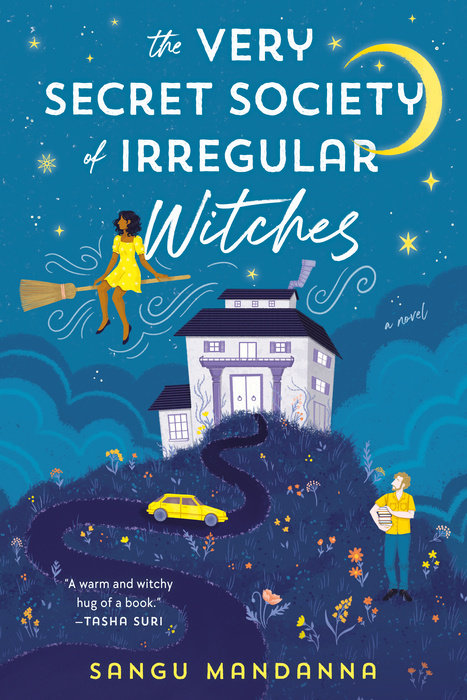
Title: The Very Secret Society of Irregular Witches
Author: Sangu Mandanna
Genre: Cozy fantasy, romance

Happy spooky month! My book club read The Very Secret Society of Irregular Witches this month, and it was a fun story about a lonely witch finding a family.

There aren't many rules for witches, but the most important rule is to keep yourself hidden. Another very important rule is witches should not gather together, out of fear of magic going haywire. Mika Moon, a lonely witch, decides to break these rules when a desperate man reaches out to her for her help with teaching three young witches how to control their powers.

This is a sweet story about making your own home, focusing on Mika and the odd inhabitants of Nowhere House, including a grumpy but handsome librarian, Jamie. Thanks to Mika’s cold upbringing, she has few connections with others and feels isolated. As she becomes more comfortable at Nowhere House, she starts questioning the rules she was raised with and fall in love with Jamie. The residents are also misfits of society who are fiercely protective of the safe refuge they made, understand her loneliness and extends their family to her. However, when Mika learns their secrets, she realizes the situation is more complicated than expected.

Spoilers for the ending )

I am not usually a fan of cozy fantasies, but this was a nice breezy read and I enjoyed the romance. It’s a rather predictable story, but still entertaining with charming characters that you just want to root for. I'm also admittedly a big fan of the Jane Austen references throughout the books!
silversea: Asian woman reading (Reading)
[personal profile] silversea


Title: Know My Name
Author: Chanel Miller
Genre: Memoir
Content warning: Sexual assault

“I am a victim, I have no qualms with this word, only with the idea that it is all that I am.”

A memoir by Chanel Miller, whom you may know as Emily Doe from her famous victim statement in 2016 after her assailant, Brock Turner, was sentenced to 6 months in jail. In 2019, Miller revealed her identity along with a new book about her sexual assault, the lasting trauma from it, her fight for justice, and her ongoing recovery.

This is an excellent memoir, starting from the day Miller was assaulted and the morning she woke up without any memories of the assault to the world's responses to her victim statement that went viral and the changes in the judiciary system. Like in the victim statement, Miller did not shy away from sharing vulnerable moments, such as her depression isolating her from family and friends, but also gradually learning how to heal through friends, therapy, and new hobbies.

Review )
smellyunfortunate: the anchovy king, a mutated fish from the game dredge. several dark fish bodies are tangled into each other with no clear beginning or end, bulging yellow eyes poking out of the mass. (anchovy)
[personal profile] smellyunfortunate
Title: Our Hideous Progeny
Author: C.E. McGill
Genre: Horror, historical fiction, gothic fiction

The cover of the book Our Hideous Progeny. Around the title, various shells, bones, and other parts of animals are arranged. From the center, one reptilian eye stares out.

“I loved it. From the moment I first met its strange and terrible eyes, I loved it.” - Our Hideous Progeny, C.E. McGill

I'll be the first to admit that I'm a bit suspicious of retellings and spin-offs by nature. There are some great ones out there, sure, but generally my opinion is that if you really want to make a story your own, you should be twisting it out of its original shape enough to fit a new mold. Not unrecognizable, but not reliant on its original form to survive on its own.

I'm happy to report that Our Hideous Progeny fulfilled my expectations in this sense. Billed as a feminist, queer spin on Frankenstein, its protagonist is Mary Sutherland, who carries on the ill-advised legacy of her great-uncle, Victor von Frankenstein himself. While the concept is fun enough, what caught me from the beginning was the cover. It promised one thing that catches me hook, line, and sinker: prehistoric, hideous beasts.

Read more... )
althea_valara: The Ninth Doctor says, "Fantastic!" (fantastic!)
[personal profile] althea_valara
Title: The Countess Conspiracy
Author: Courtney Milan
Genre: Historical Romance
ISBN-13: 978-1937248208

The cover image for "The Countess Conspiracy" by Courtney Milan.


Today I am reviewing The Countess Conspiracy by Courtney Milan, which is a historical romance that takes place in England in 1867.

Folks, it is brilliant. Utterly brilliant, and perfect, and just wonderful.

I've been reading romance novels since I was a teenager. The ones I read back then were pretty predictable: hero and heroine meet and fall instantly in lust but dance around each other for a time until they finally come together. There is a lot of banter and fun conversations, but usually the hero denies his feelings for her (sometimes the heroine is in denial, too, but usually it's the hero.) Then the damsel gets in distress and shoot, the hero realizes how much he loves her and rescues her and they live happily ever after, the end.

They're fun for escapism, but I don't think I could really tolerate them today, mostly because of the damsel in distress trope. But also: there is nothing in the books to really convince me that the couple is in love with each other, other than the author says they are.

Contrast that with Courtney Milan's books. The Countess Conspiracy is a romance novel, so yes there is a certain amount of sexy stuff going on, but it's really a book about love. Halfway through the book I was thinking, "Of course he loves her, look at all he's done for her! Look at how she sees him. I would be in love, too, if someone saw me the way she saw him." And the same goes for the heroine, who has her own reasons to love him that are just as believable.

One of the things I really love about Courtney's books is that there's not just the main plot of "heroine and hero get together" but also, at the very least, a B plot, sometimes with a bonus romance happening. The B plot usually involves character(s) that are important to the heroine or hero, and really helps to flesh out story and characters. You get the sense that these are real people with their cares and concerns and yes, flaws and foibles.

I cannot recommend this book enough. I'd suggest reading the other books in the series first as the heroine and hero of The Countess Conspiracy are introduced in the earlier books: there's a pre-quel novella that's a great read, called "The Governess Affair"; it's not as required for enjoying The Countess Conspiracy but is a good read on its own. Book 1 in the series is The Duchess War and book 2 is The Heiress Effect. The Duchess War is really good; The Heiress Effect is super fun and I loved it for its nuanced characters (and what a cast of characters it has!). And I didn't think it possible, but The Countess Conspiracy got even BETTER.

By now you're probably wondering just what The Countess Conspiracy is about. If you read the other books in the series first, then when you read The Countess Conspiracy, your jaw will drop at a revelation early in the story. I don't want to give it away, so I'll just say the book is about smart people doing brilliant things and being the odd ones in their families. I will warn that the book's blurb on Amazon gives away what the "conspiracy" is about; I'm glad I didn't know that going into the book because the surprise was quite fun for me.

There's also some overcoming of past trauma. Some folks might be upset by that trauma, so I'll put it in a cut.

SPOILERS but content warning for medical traumaSo Violet (the heroine) was previously married; at the minimum, her husband was a selfish jerk. She gets repeatedly pregnant, but suffers from some really traumatic miscarriages. Folks with medical trauma might be upset with this, so read with caution.


I've read a bunch of Courtney's books by now, and they've all been wonderful in their own ways, but The Countess Conspiracy is by far my favorite. I hope you give it a try.
huxleyenne: (deal me in)
[personal profile] huxleyenne
Full Title: Amusing Ourselves to Death: Public Discourse in the Age of Show Business

Author: Neil Postman

First Published: In the United States of America by Viking, an Imprint of Penguin Random House LLC, 1985

Today I would like to briefly discuss a book I first read two and a half years ago, but has undoubtedly rocked my world, shaken my perception of entertainment, and every television/Internet-connected screen in which I find myself parked and glued.

This book, published in 1985, is as relevant as ever 40 years later, despite being a critical discourse on American television and its role in society.

Postman digs into all sorts of media, none of which he bombards with more side-eye than television news, which he basically regards as the apex of brainrot back in the 1980s, and quite frankly, I think he’s right.

I grew up in America, raised on a glut of television programs and commercials. If I had read his book any time before late 2016, I would have assumed this author was just kind of poo poo and anti-tech, or perhaps I would have likened him to the same kind of people who blame violence in schools on video games. I cannot see myself reading and accepting Postman’s work before 2016.

Now? Of all authors I’ve ever read in my life, I don’t think any have predicted America’s future with haunting accuracy the way Brave New World by Aldous Huxley has. It was Postman’s work that led me to Huxley (I already read Orwell in school by the time I found Postman, but Huxley was new to me.)

The value of reading Amusing Ourselves to Death in 2025 is that it can give readers, both open-minded Americans and folks in other countries, a picture of how it came to be that we, the people, are so easily influenced and swayed by hypnotic video media, and why that might be. It’s like, most of us see it, but don’t quite have the words for it. Instead, many people would lazily dismiss this as mere ignorance/stupidity and walk away feeling superior for the sake of feeling superior, probably.

I'm not here to express a "superior" or "heightened" awareness, as it were, but I am here to encourage everyone to think about what they watch, why, and how it might affect them. I think everyone has a right to know, especially because propagandists and advertisers don't want us to. It's not in the best interest of their bloated wallets for us to think critically about media consumption.

Anyway, Postman, a man who considered himself a “media ecologist,” expressed many concerns regarding television (and many of those concerns apply to how we use the Internet as well.) He has serious doubts about its ability to educate people, especially when education is the intent. He doesn’t regard it as a good source of information at all, least of all that which we call “news.” Heck, this man Postman, especially his 1980s self, would probably argue that a solid half hour of someone swimming in poo is of higher intellectual value than Fox News from an entirely unironic point of view.

As with any nonfiction book, I wouldn’t encourage anyone to read this and take it as gospel. It’s here to help you think, open your eyes, and draw your own conclusions, which is what Postman himself would want, I believe.

Postman was a critic with plenty of critics, and rightly so, I’m sure. Even so, he’s given me so much to think about, and I don’t know for sure if he’s the driving force or just a little piece of the puzzle, but the way I watch television now is different. I don’t know if I’d call it heightened awareness or disillusionment, but I’m relieved to have a voice from the decade in which I was born to give words to much of what I’ve been thinking of news, programs, and memetic culture over the past ten years. Take Postman's work with a grain of salt if you must, but do give him a chance if social sciences and humanities are of interest to you. Thank you.
chroniclesofreading: (Default)
[personal profile] chroniclesofreading


AUTHOR: Neil Gaiman, Dave McKean (Illustrator )
RELEASED: April 24, 2012 by HarperCollins
GENRE: Dark Fantasy
AGE RANGE: Children's
SYNOPSIS: When Coraline steps through a door to find another house strangely similar to her own (only better), things seem marvelous.

But there's another mother there, and another father, and they want her to stay and be their little girl. They want to change her and never let her go.

Coraline will have to fight with all her wits and courage if she is to save herself and return to her ordinary life.


Celebrating ten years of Neil Gaiman's first modern classic for young readers, this edition is enriched with a brand-new foreword from the author, a reader's guide, and more.


Read More )
quillpunk: the device of utter doom, upon which only doom and only doom can be achieved (doom)
[personal profile] quillpunk
Title Lout of Count's Family, Vol. 1
Author: Yu Ryeo-Han
Genre: Fantasy
Review: So back before the translation left Wuxiaworld, I read something like 600 chapters of this novel; the most I've ever read of any webnovel. I really liked it! But once the translation left I didn't keep up with it, and I haven't read it in years. But then Seven Seas published it? And I kind of regret that I got it as an ebook now, because I adore this so much and I want it on my physical shelf but I'm not sure how to justify that when I've already got it. Decisions, decisions.

Anyway, Lout of Count's Family (I'm never going to get used to the new title, LOL) is a korean webnovel in which an ordinary man who just wants to live a simple, lazy life is transmigrated into a lout of a count's son in a fantasy novel.  Luckily, he's read the first five volumes of the novel! Unlucky, doom and despair awaits as the continent will descend into war, and the Real Protagonist will, On The Road To Becoming a Hero run across Cale Henituse, the count's lout of a son. And things don't go that great for Cale, then. Ouch.

So in order to prevent this, Kim Roksu, now Cale, decides to skip passed all the fighting and just drag the protagonist to his future side-kicks so they can set out on their adventure and leave him alone.

Somehow things don't turn out that way. Wonder why. Could it... possibly.. have to do with the fact that Cale keeps saving people? No. No, that can't be why. I'm sure it's just... the natural... wings of a butterfly... and all that...

Hahhahah. Cale didn't do this to himself, did he?

No. Of course not. Haha. Ha.

Anyway, so yeah it's all Cale's fault that things then go way off the rails. Things escalate. They escalate so much. Not in the first volume! (Although things certainly get set in motion.) But things will escalate so much, it's hilarious.

I love this novel. I love all the characters. I love the dichotomy of the way the other characters view Cale and his actions vs. what Cale thinks and why he's doing what he's doing. I think the first volume sets up a lot of relationships and misunderstandings and worldbuilding, and I find the development of the various relationships to be lovely. There's so much friendship going around and so many different dynamics, which is really fun (and also scheming. I like the scheming, too.) 

I can't wait for more to be released. I am gritting my teeth against the urge to buy both ebooks + paperbacks. Sigh. My poor budget.
anehan: Elizabeth Bennet with the text "sparkling". (Default)
[personal profile] anehan
Title: The Egyptian: fifteen books on the life of Sinuhe the physician, c. 1390-1335 BC
Original title: Sinuhe egyptiläinen: viisitoista kirjaa lääkäri Sinuhen elämästä n. 1390-1335 e.Kr.
Author: Mika Waltari
Translator: English translation by Naomi Walford
Year: published in 1945 (Finnish original), 1949 (English translation)
Genre: historical fiction
Content warnings: period-typical slavery; ahistorical racism, racist language (by modern standards); non-graphical depictions of violence

I, Sinuhe, the son of Senmut and of his wife Kipa, write this. I do not write it to the glory of the gods of Kem, for I am weary of gods, nor to the glory of the Pharaohs, for I am weary of their deeds. ... For my own sake only I write this.

Thus begins Mika Waltari's The Egyptian, one of the most beloved novels in the history of Finnish literature. The Egyptian is an autobiography by a fictional physician called Sinuhe. Sinuhe was born during the reign of Pharaoh Amehotep III, in the same year as Amenhotep's son, who would later become Pharaoh Ekhnaton. He writes his memoir in exile, during the reign of Pharaoh Horemheb, the last of the 18th dynasty Pharaohs.

Mild spoilers )

The Egyptian is a pessimistic novel. Waltari wrote it in the span of a few months just after the end of the Second World War, and the effect of the events of the preceding decades are clear in it. Waltari has admitted to using places and events in the novel as allegories for places and events in modern Europe. The novel is a smorgasbord of corruption, religious zealotry, mob rule, and war crimes. It's full of cruelty, though it never gets very explicit in its depictions.

However, The Egyptian is also merciful in its depiction of human nature. It's true that no one is a hero in it, not even Sinuhe himself. Everyone, from the pacifist Ekhnaton to the slaves and poor labourers, is capable of great cruelty. Often, the people with good intentions are even worse than the selfish ones. And yet, the novel, through the character of Sinuhe, also shows understanding and sympathy for these people, even when they act in deplorable ways.

The Egyptian has been translated into many languages. However, many of the translations have apparently used the English edition as their source, rather than the original Finnish, which is a shame. The English translation was based on the abridged Swedish edition and was actually even further abridged. Not all of the editions have been translated from English, though. The German edition, for example, has been translated from Finnish and is unabridged.

I myself read the original Finnish edition, so I can't offer any in-depth comments on any translations, though at first glance Walford's English translation seems good (aside from the abridging). There is also a full English translation available online, though I presume it's an unlicensed one. A commenter on Reddit called it an improvement in general, but said that it felt clunkier than Walford's translation.

In my opinion, The Egyptian is fully deserving of its fame. It's a vivid portrayal of life in Ancient Egypt and the Near East -- Waltari definitely did his research, though he also took artistic liberties with historical facts -- and though it's pessimistic, that's part of its appeal. It's a brick of a book, sure, but it's a rewarding and surprisingly easy read. If you can read it unabridged, I recommend that, but I think even the abridged editions are most likely worth reading.

(Mod! Could we have a genre tag for historical fiction, please?)
phantomtomato: (Default)
[personal profile] phantomtomato
Title: A Glass of Blessings
Author: Barbara Pym
Year: 1958

Our delightful first-person narrator is Wilmet Forsyth, a 1950s middle-class London housewife in her thirties. Pym takes the basic premise of boredom with one’s marriage amidst a backdrop of neighborhood gossip and makes it a compelling piece of character work as we’re exposed to each player and their dramas through Wilmet’s judgmental eyes.

I want to be clear: Wilmet is more enjoyable for her pettishness. Pym threads the needle between her narrator expressing biases and the narrative recognizing those biases—you’re never really expected to agree with Wilmet’s verdict on any of her acquaintances in order to proceed with the story. What I think helps, though, is that you probably will—while Wilmet is not a terribly accurate judge of character, she is a funny one and has sharp insights, and some critiques (of a minister’s spending or a man’s obsession with his car) will probably land. She’s like a friend who always brings good gossip, but who you know will gossip about you in turn. These are not unpleasant relationships, if you mind your expectations!

We meet Wilmet when she is looking for some occupation. Not employment, she happily scorns that, but she is bored and wants to fill her days with more than shopping. This leads her to become involved with her parish community (she attends a church called St. Luke’s, and the majority of the extended cast are here) and, at the same time, she connects with her best friend’s brother, Piers. Piers and the St. Luke’s crowd end up connecting in unexpected ways, especially as Wilmet introduces more people to the St. Luke’s network—she recommends a housekeeper for the rectory, which cements her ties to the three clergymen who serve the church.

The strength of this novel is in having so many interesting characters for Wilmet to observe. Objectively, Wilmet does very little. She goes places and talks to people, but the romances and deaths and controversies really belong to the wider cast. She manages a crush on Piers, but her giddiness shows largely in her telling of her own feelings, not in any dramatic actions to express that. Pym handles a dozen overlapping plotlines beautifully, and they all feel like authentic experiences for people in those roles during that era. If you enjoy careful observations of behavior and personality, or you like comedies of manners, this book is a great option.
quillpunk: Mr. Villain from the anime Mr. Villain's Day Off (mr villain is thinking)
[personal profile] quillpunk
Title: Crimson Halo
Author: Daniel May
Genre: Paranormal Romance
CW: The main character has an unnamed mental illness, which includes graphic descriptions/depictions of hallucinations and withdrawal from the meds he needs but has run out of due to the pharmacy not having them in stock.
Review: I didn't expect to like this book nearly as much as I did. *Crimson Halo* is a paranormal M/M vampire romance, with insta-romance and a vampire that's right up my alley. I haven't been into the vampire genre in a long time, and the last few tries I made at reading MM vampire romance did not pan out at all; I think I DNF'd both, and I just really didn't have any expectations picking this up—but I was really pleasantly surprised. The writing style works incredibly well for me, and the portrayal of vampires is a nice break from the angsty, brooding vampires I remember.

I just adore the side characters in this, in particular the relationship the vampire has with his familiar, and the relationship he has with his former familiar. It becomes clear during the course of the book that the reason for his emotional changes—going from a cold, distant vampire to a person aching for companionship and love—is in large part because of his former familiar, with whom he had a familial relationship. He’s a little emotionally constipated about it! But honestly, without her laying the groundwork, the vampire never would have been in a place where he would fall in insta-love.

(Yes, it’s been a minute since I read this and I’ve forgotten everybody’s names.)

In addition to the romance, there’s a mystery. Someone’s killing humans, and in a city with vampires that are more or less under control, who could it be? I clocked it. I figured it out. It wasn’t super hard, the clues were there—but honestly, I like this a lot more than mysteries that don’t give clues at all. (Tossing shade.) And I think the resolution to the mystery makes sense.

The romance is lovely, and the ending feels sound. I like the various friendships that are in the book; I think this succeeded very well at making it clear there exists something in this world beyond just the main characters’ relationship, which is cool!

Overall, I had a really good time with this book, and I definitely recommend it! :D
jajalala: Photo of porcelain squirrel eating a nut (Default)
[personal profile] jajalala


Title: Endurance
Author: Elaine Burns
Genre: Science fiction

What if you were stranded. On a spaceship. Four light years from Earth. With a hundred tourists. And you are the captain. Then things start to go wrong. Welcome aboard the Endurance. It’ll be the trip of a lifetime.

Full blurb here for those who like to read the blurb:
For five years, Captain Lyn Randall of the Endurance has ferried tourists around the solar system for Omara Tours. Now, as she takes in the rings of Saturn for the last time, she’s looking forward to indulging in simpler pleasures like flying antique airplanes over her childhood home in Montana.

The routine tour becomes anything but when a mysterious phenomenon flings Endurance and two other ships into the Rigil Kentaurus system, four light years from Earth. Stranded, with no way to get back.

Lyn’s first duty is to rescue survivors from the other ships before she faces the most daunting task of her life, much less her career. She has to control her fears and grief to lead an untested crew and panicked guests on a quest for a new home planet or risk a return to their solar system that could kill them all. Unfortunately, Lyn’s past with a clandestine military mission gone wrong doesn’t sit well with some guests and crew members, and they don’t quite trust her.

Diana Squires, rescued from another stranded vessel, grudgingly reveals her identity as the daughter of scientists who researched traversable wormholes. To complicate everything, Lyn develops an affection for Diana, something at odds with her responsibilities as captain and her unhealed grief over her own lost loved ones.

Feelings aside, suspicions aside, her own doubts about her ability to lead aside, Lyn has to fight to protect her passengers, her ship, and her heart.


If you like the sound of sci-fi disaster/survival scenarios focused on community-building, leadership, and hope, you may want to check this out

My main emotion while reading this novel was STRESS. Captain Lyn Randall of the spaceship Endurance ends up mysteriously flung through space into an isolated area light years away from any help, effectively trapped in a potentially life-long spaceship survival scenario with her crew and the group of tourists who were onboard. As they were a tourist spaceship intended to dock in a matter of months, they did NOT plan for this kind of long-term survival.

The tech
Luckily, it's the future, so there is tech that makes their survival feasible. However, the story effectively balances the boons and strengths of these new technologies that make a reader feel like "okay, this is how they can survive" while also imposing limitations and costs that keep the tension strong. For example, the ship runs on a Recyc-All system, which takes in mass and reformats the molecules into whatever you need. Super nifty and great in a closed loop system! However, there is inevitable loss in mass as time goes on, and so they have to find a way to harvest raw physical materials from planets they pass by... meaning risky missions trying to pilot tiny ships on and off of a planet surface. Additionally, the Recyc-All is a piece of technology... and sometimes technology fails. In other words, though there's all sorts of advanced technology (even beyond the Recyc-All which I used as an example), the stakes stay high.

The relationships/people
I adored Captain Lyn--she's upstanding, stoic, a bit awkward, but has a core strength that carries her crew and passengers through the harrowing journey. She is forced to make difficult decisions, and although she relies on others in fields she's less well-versed in, ultimately she is the person who has to grapple with and decide the direction they go... without causing mutiny.

One of the things I loved about this book was the focus on the overall community of the spaceship, and how important and valuable it was to consider it as a factor. Obviously the tech and resources sides are intense, but as this is a crew of PEOPLE they have a lot of people's problems... clashing personalities, distrust, but also people reaching out and supporting each other in unique ways. There was a large cast of characters, but I had a strong sense of most of them because they were all unique and adding something specific to the overall tapestry that was this spaceship community. Characters had traits that could be detriments or strengths, and one of Captain Lyn's abilities is to navigate and deploy their talents in a way that allows their strengths to shine.

That's not to say there isn't acknowledgement of how dark humanity can get when in this kind of scenario, but the Endurance is fortunate to have Lyn and most of their ship intact and the ability to spend some time keeping everyone on board happy and hopeful. Tensions grow as time passes and it's clear there is no rescue coming--crew and passengers disagree, distrust festers, and there are relationship/community crises that are just as nail-bitingly tense and high-stakes as the tech crises... but overall by the end it was a book that gave me a hopeful feeling about humanity and its ability to band together.

TL;DR
This book was a rich, delicious sci-fi crisis survival story that particularly focuses on the value of community and teamwork. Though the tech is advanced, strong tension is maintained--as soon as I felt like "Whew, things are stable!" there would be something new that threw things out of balance and required Captain Lyn to pivot and manage a new crisis. Basically, I had to churn through the last fourth of the book or so in one day because I was desperate to see what happened next. A page-turner with a hopeful center!

Profile

a nook just for the books

May 2026

S M T W T F S
      1 2
3 45 6789
10 11 12 13141516
1718 19 20212223
24252627282930
31      

Syndicate

RSS Atom

Most Popular Tags

Style Credit

Expand Cut Tags

No cut tags
Page generated May. 21st, 2026 07:49 pm
Powered by Dreamwidth Studios